AI Isn’t Coming for Your Job — It’s Coming for Your Workflow
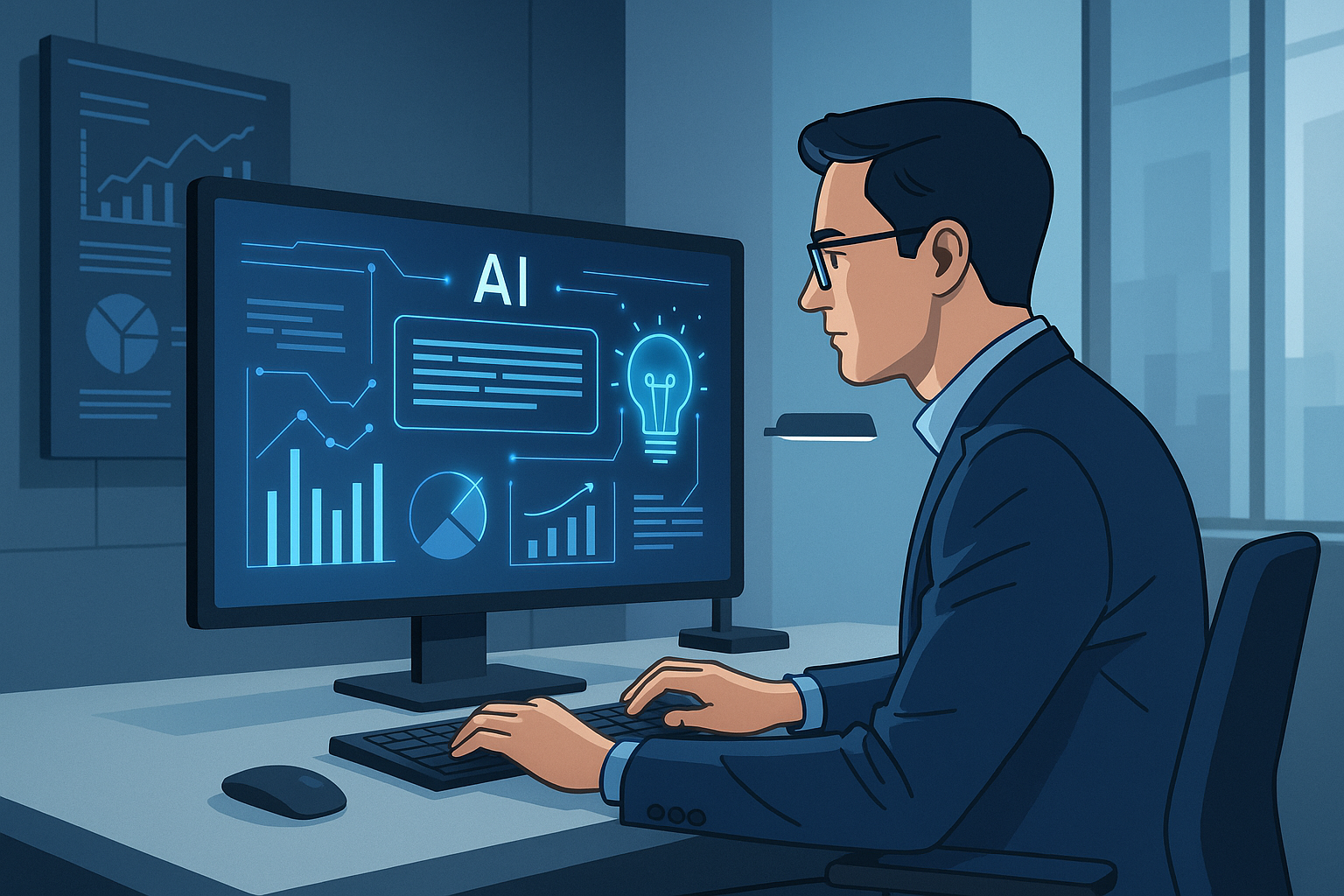
AI isn’t coming for your job.
It’s coming for your workflow.
That line tends to stop people in their tracks — and it should. Because for most product marketers and marketing leaders, the real disruption isn’t about headcount. It’s about how you work, how fast you learn, and how intelligently you can scale your craft.
The truth is, AI has already changed the pace of marketing. The question isn’t “Should PMMs use AI?” — it’s “How fast can you rebuild your workflow around it?”
The Shift: From Pilot Projects to Platform Thinking
For the past few years, many of us treated AI like a side hustle — a fun experiment for brainstorming copy or summarizing research. But that era’s over.
AI is now the invisible infrastructure behind every insight, message, and market movement. It’s how we scale creativity, accelerate go-to-market velocity, and make data as human as storytelling.
The PMMs who thrive in this new landscape aren’t the ones who can build another deck. They’re the ones who can build a system — a repeatable, intelligent loop that connects insights to narrative, narrative to execution, and execution to measurable impact.
The Gap: Why Most Teams Still Feel “Busy” but Not Impactful
Walk into almost any marketing org and you’ll see the same pattern:
- Brilliant minds stuck editing slides.
- Dozens of campaigns that don’t connect.
- Teams producing content, not capacity.
The problem isn’t effort — it’s architecture. We’re optimizing outputs, not systems. Most PMMs still operate as “content creators” instead of system designers. They’re writing copy instead of building engines that keep writing for them.
That’s the gap — and it’s widening every quarter.
The Risk: Becoming an Order-Taker in an Automated World
If your org is moving at machine speed, manual marketing starts to look like drag. When every other function is automating analysis, testing, and reporting, human-only execution suddenly feels slow — even if the work is excellent.
That’s how talented PMMs end up trapped as “order takers.” They’re not less skilled — they’re just less systemized.
The risk isn’t that AI replaces you.
It’s that it redefines the expectations of what strategic marketing looks like.
The Solution: Think Like a System Designer
The PMM of the future is part storyteller, part architect. You don’t need to become a data scientist — you just need to design workflows that learn.
Here’s what that looks like in practice:
- Research at machine speed: Automate market scans with tools like Perplexity, Feedly AI, or AlphaSense to detect shifts early.
- Adaptive positioning: Use AI to generate and test variations of your message for each persona and stage.
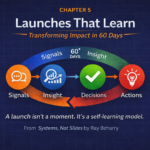
- Launches that learn: Treat every campaign as a feedback system, not a one-time event.
- Enablement that evolves: Build seller-assist GPTs that learn from objections and update weekly.
This is what “AI-productive” really means — not more tools, but a tighter loop between signal and action.
The Future: From AI-Ready to AI-Progressive
Tomorrow’s most valuable marketers won’t just be AI-ready. They’ll be AI-progressive — the ones who turn marketing from a cost center into a growth algorithm.
They’ll lead teams that think in data, design in loops, and scale storytelling through systems. They’ll be the ones who can explain not just what happened, but why — and adjust the system before the next dashboard refresh.
The PMMs who embrace this now will redefine what it means to be strategic. The ones who wait will end up managing slides while the market moves on.
Final Thought
AI doesn’t make your craft obsolete — it multiplies it. It’s leverage, not a threat.
The goal isn’t to work harder or even faster — it’s to build a smarter loop.
What part of your workflow could be learning while you sleep?
Because that’s where your competitive advantage starts.
Read more in my new book, Systems, Not Slides: An AI Blueprint for Product Marketing.

You may also like
Designing Real-Time Intelligence for Sales
Launches that Learn